Data Governance tools are software solutions designed to establish, enforce, and manage data governance policies and practices within an organization. These tools help ensure data quality, security, compliance, and data management best practices are implemented effectively across the entire data lifecycle.
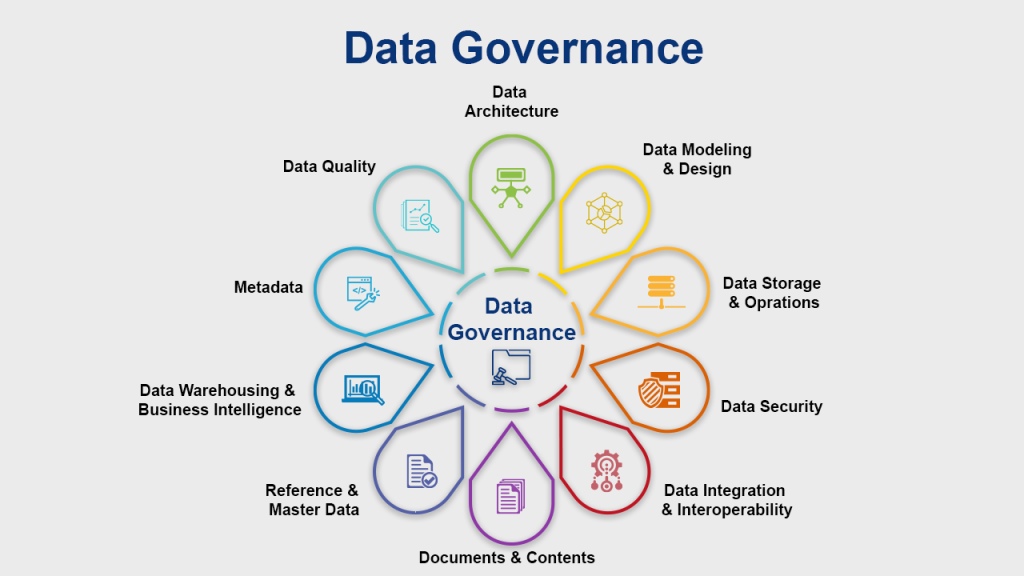
Key Features of Data Governance Tools:
- Data Catalog: Data governance tools often include a data catalog that serves as a centralized repository for metadata and information about data assets, making it easier to discover, understand, and access data.
- Data Classification: These tools support data classification, allowing users to categorize data based on sensitivity, criticality, ownership, or other business criteria.
- Data Policies and Rules: Data governance tools enable organizations to define and enforce data governance policies, data quality rules, and data usage guidelines.
- Data Governance Reporting: Data governance tools provide reports and dashboards to monitor data governance activities and track data governance metrics.
- Data Integration: Many data governance tools integrate with data integration platforms, data quality tools, and other data management solutions to ensure consistent data governance across the data ecosystem.
Popular Data Governance Tools:
- Collibra Data Governance
- Informatica Axon Data Governance
- Alation Data Catalog and Data Governance
- IBM InfoSphere Information Governance Catalog
- Talend Data Fabric
1. Collibra Data GovernanceInformatica Axon Data Governance
Collibra Data Governance is a popular data intelligence and data governance platform provided by Collibra, a leading data governance and data catalog software company. Collibra Data Governance is designed to help organizations manage and govern their data assets effectively, ensuring data quality, compliance, and data-driven decision-making across the entire data lifecycle.
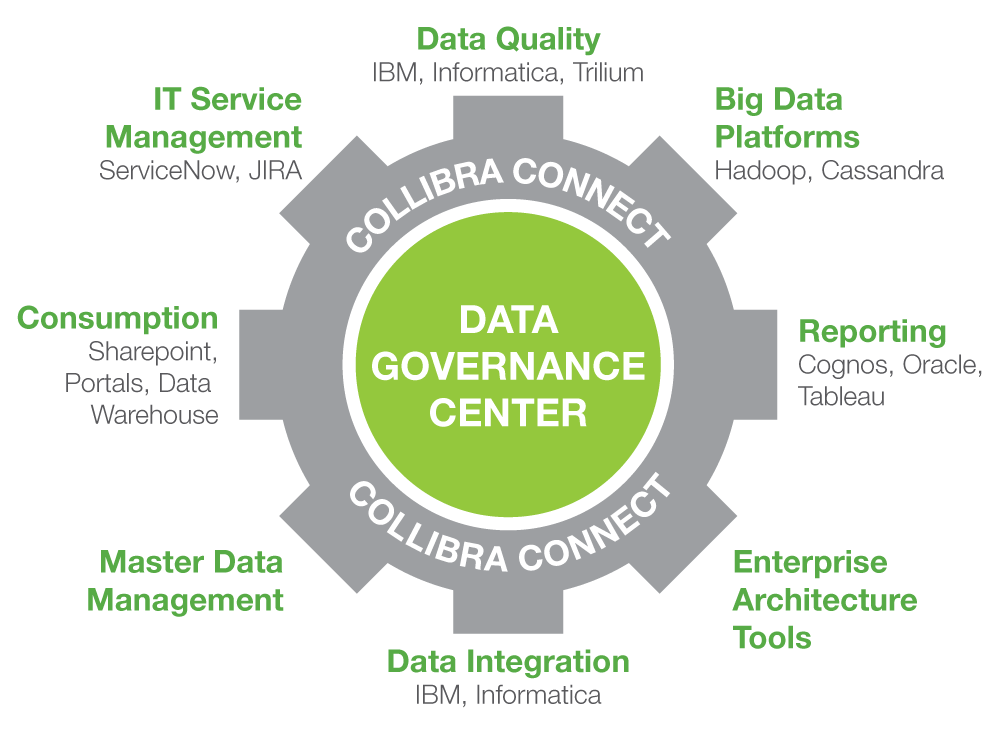
Key Features of Collibra Data Governance:
- Data Governance Workflows: The platform supports configurable data governance workflows, enabling organizations to define and automate data governance processes and approvals.
- Data Stewardship: Collibra facilitates data stewardship by assigning roles and responsibilities to data stewards who oversee data governance processes and data issue resolution.
- Data Policies and Rules: Collibra allows organizations to define data governance policies, data standards, and data quality rules to enforce data governance best practices.
2. Informatica Axon Data Governance
Informatica Axon is a data governance and data intelligence platform provided by Informatica, a leading data integration and data management software company. Axon is designed to help organizations establish and enforce data governance policies, ensuring data quality, compliance, and data management best practices are implemented effectively across the entire data lifecycle.
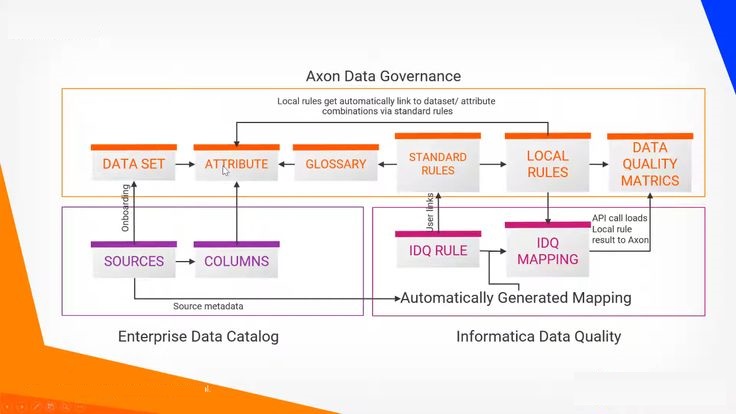
Key Features of Informatica Axon:
- Business Glossary: The platform includes a business glossary that provides a common business vocabulary for data assets, promoting data understanding and alignment between business and IT.
- Data Quality and Profiling: Informatica Axon supports data quality and data profiling, allowing users to assess data quality and identify data anomalies and inconsistencies.
- Data Privacy and Compliance: Axon helps organizations comply with data privacy regulations by providing features for data classification, data protection, and data access controls.
3. Alation Data Catalog and Data Governance
Alation Governance is a data governance solution provided by Alation, a leading data catalog and data governance software company. Alation Governance is designed to help organizations establish and enforce data governance policies, ensuring data quality, compliance, and data management best practices are implemented effectively across the entire data ecosystem.
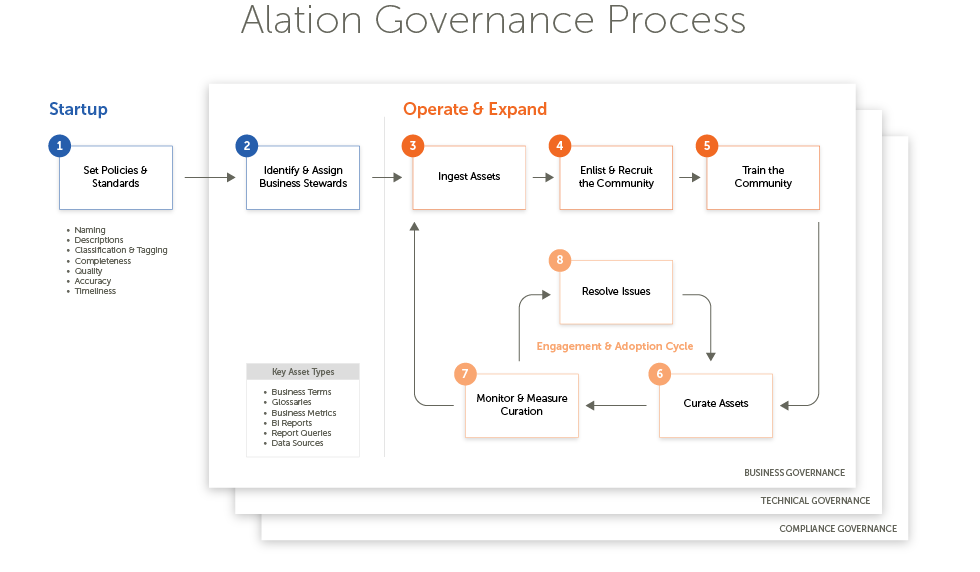
Key Features of Alation Governance:
- Data Catalog: Alation Governance provides a comprehensive data catalog that centralizes metadata and information about data assets, making it easier for users to discover and access trusted data.
- Data Lineage: The platform supports data lineage tracking, enabling users to visualize and track the flow of data from its origin to its destination, ensuring data traceability and data accountability.
- Data Governance Workflows: Alation Governance supports configurable data governance workflows, allowing organizations to define and automate data governance processes and approvals.
4. IBM InfoSphere Information Governance Catalog
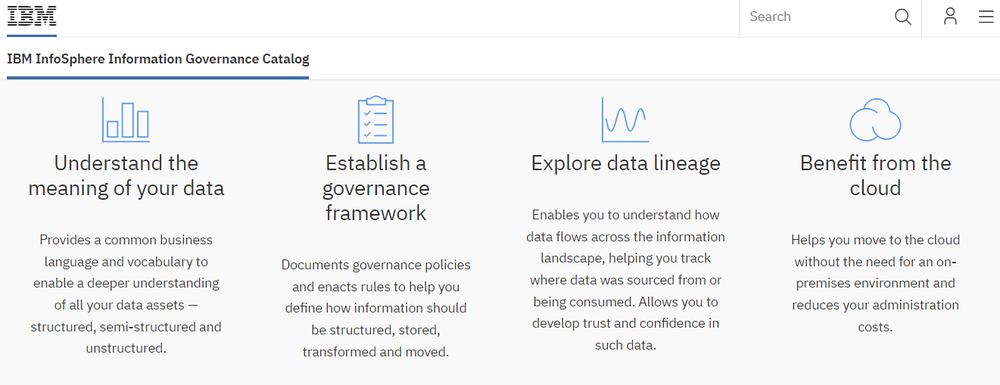
IBM InfoSphere Information Governance Catalog is a data catalog and data governance tool provided by IBM as part of the IBM InfoSphere Information Server suite. It is designed to help organizations discover, understand, and govern their data assets effectively. The Information Governance Catalog serves as a centralized repository for metadata and information about data assets, making it easier for users to discover and access trusted data.
Key Features of IBM InfoSphere Information Governance Catalog:
- Data Collaboration: The platform facilitates collaboration among data stakeholders, allowing users to share insights, provide feedback, and collaborate on data governance activities.
- Integration with IBM InfoSphere Suite: IBM InfoSphere Information Governance Catalog seamlessly integrates with other components of the IBM InfoSphere Information Server suite, enabling end-to-end data integration and data governance workflows.
- Data Catalog: The Information Governance Catalog provides a comprehensive data catalog that consolidates metadata from various data sources, databases, data lakes, and data pipelines. It offers a unified view of data assets for easy discovery and access.
5. Talend Data Fabric
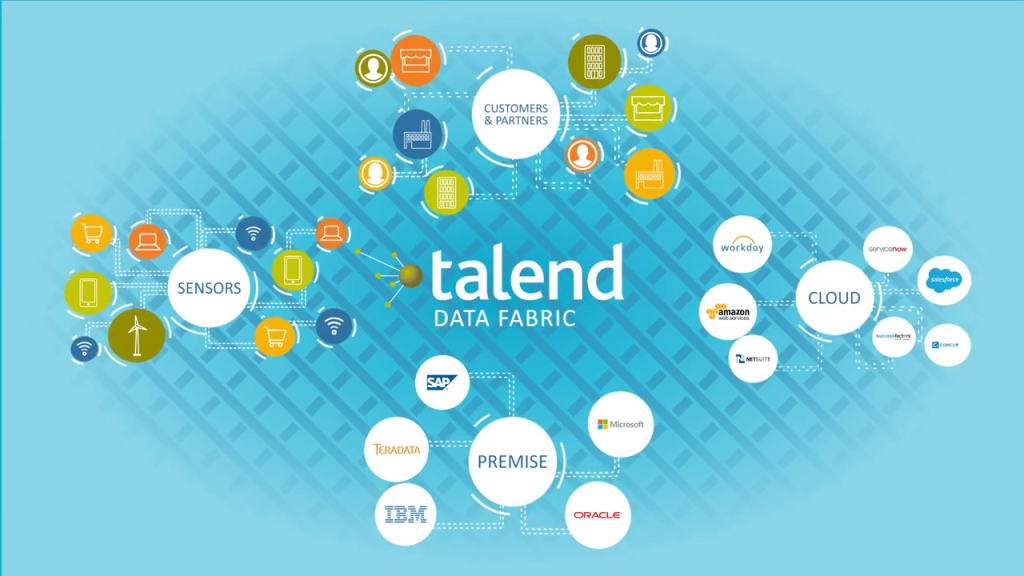
Talend Data Fabric is an integrated data integration and data management platform provided by Talend, a leading software company specializing in data integration, data quality, and data management solutions. Talend Data Fabric is designed to address the challenges of modern data integration, data governance, data quality, and data analytics, providing organizations with a unified and comprehensive approach to managing their data across the entire data lifecycle.
Key Components and Features of Talend Data Fabric:
- Data Integration: Talend Data Fabric includes Talend Data Integration, a powerful data integration and ETL (Extract, Transform, Load) tool that allows users to connect to various data sources, perform data transformations, and move data between systems seamlessly.
- Data Quality: Talend Data Fabric offers Talend Data Quality, a data profiling and data cleansing tool that helps users identify and resolve data quality issues, ensuring data accuracy and consistency.
- Data Pipelines: Talend Data Fabric enables users to build data pipelines and data integration workflows to automate data processing and data movement tasks.
- Cloud Integration: The platform supports cloud data integration, enabling organizations to integrate data from cloud-based applications and services seamlessly.
- Real-Time Data Integration: Talend Data Fabric supports real-time data integration, allowing organizations to process and analyze data in real-time for timely insights and decision-making.
